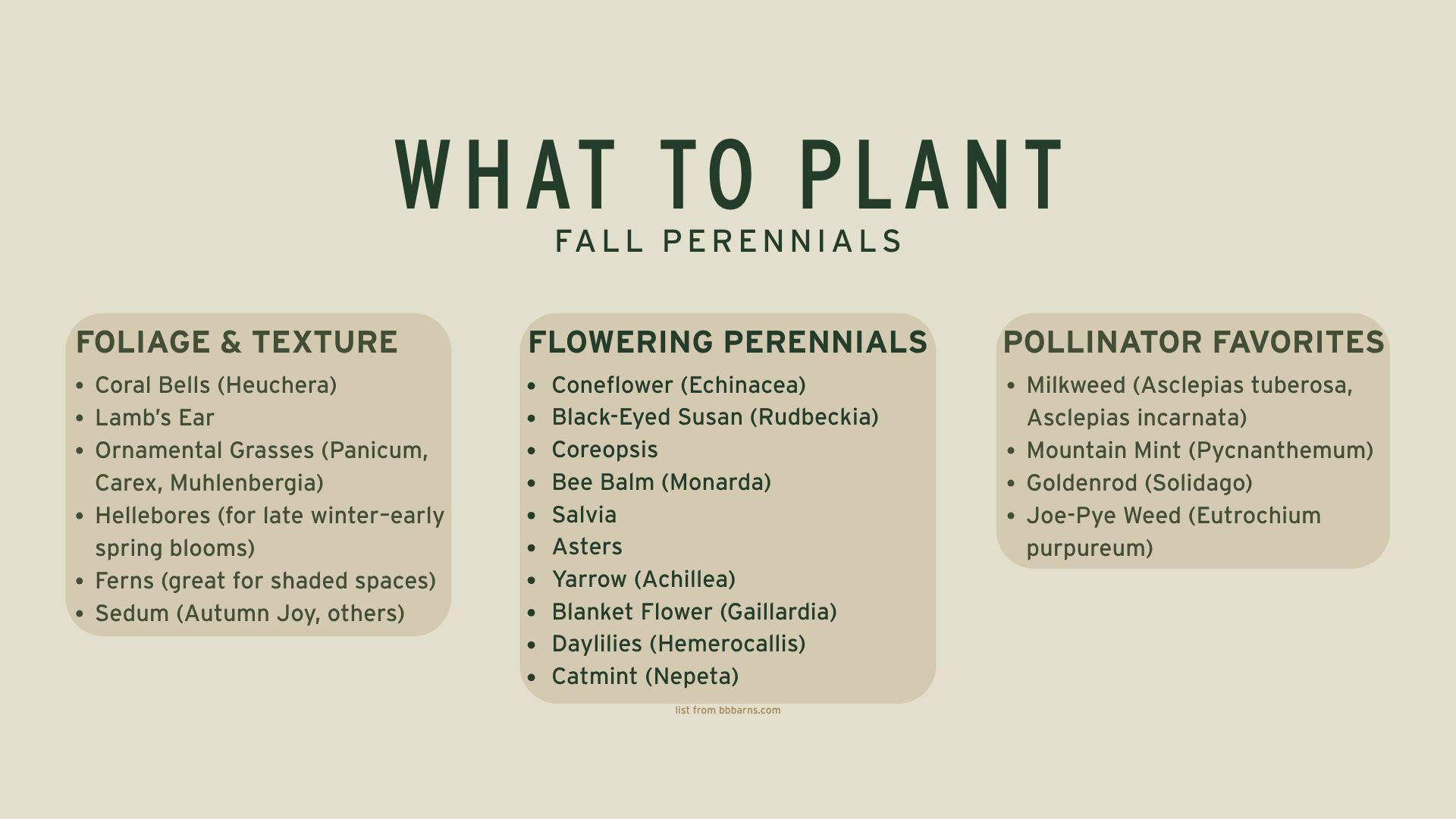
Fall is a great time to plant your perennials. With warm soil, mild air temps, and autumn rain, you have the perfect conditions for strong root development before winter sets in. Planting now may seem like a waste since the cold is creeping up on us, but it is actually ideal for growing strong, healthy plants that will thrive for years to come. Think of it like an investment in your garden, and you will still get a few months of beauty this year!
Why plant perennials in the fall? The warm soil makes it easier for roots to establish, and right now, most plants aren’t working their hardest to push out blooms, so most of the energy is going into sending these roots into the soil. The warm ground with cooler air temperatures relieves some transplant stress that may occur at other times of the year. Summer brings hot air mixed with dry, overheated soil, while spring has cooler air temps but the soil is also cold and recovering from winter. Fall typically has more consistent seasonal rainfall, and the cooler air allows the moisture to soak into the soil and help roots establish quicker. Once spring comes, the established plants will be ready to bloom early and put all of their energy towards flowers instead of settling in.
Once you pick your plants, the ideal time to plant is at least 6 weeks before the ground freezes (in our area, this is usually late December/January). Even with the heavier rainfall in the fall, be sure to water new plants deeply at the roots. Apply 2-3 inches of mulch to insulate the soil and prevent frost heaving*. And since fall planting is focusing most on root development, avoid using high-nitrogen fertilizers which promote leaf growth - just stick to root-boosting fertilizers or natural soil amendments.
Although we are holding onto the last stretch of summer, we’re excited for fall planting! It’s also a good time to divide up your established perennials (hostas, irises, daylilies, grasses, etc). Enjoy these cozier temperatures and get out in your garden!
*Frost heaving is the upward swelling and lifting of the ground surface caused when moisture in the soil freezes and expands.