Planting Perennials in the Fall

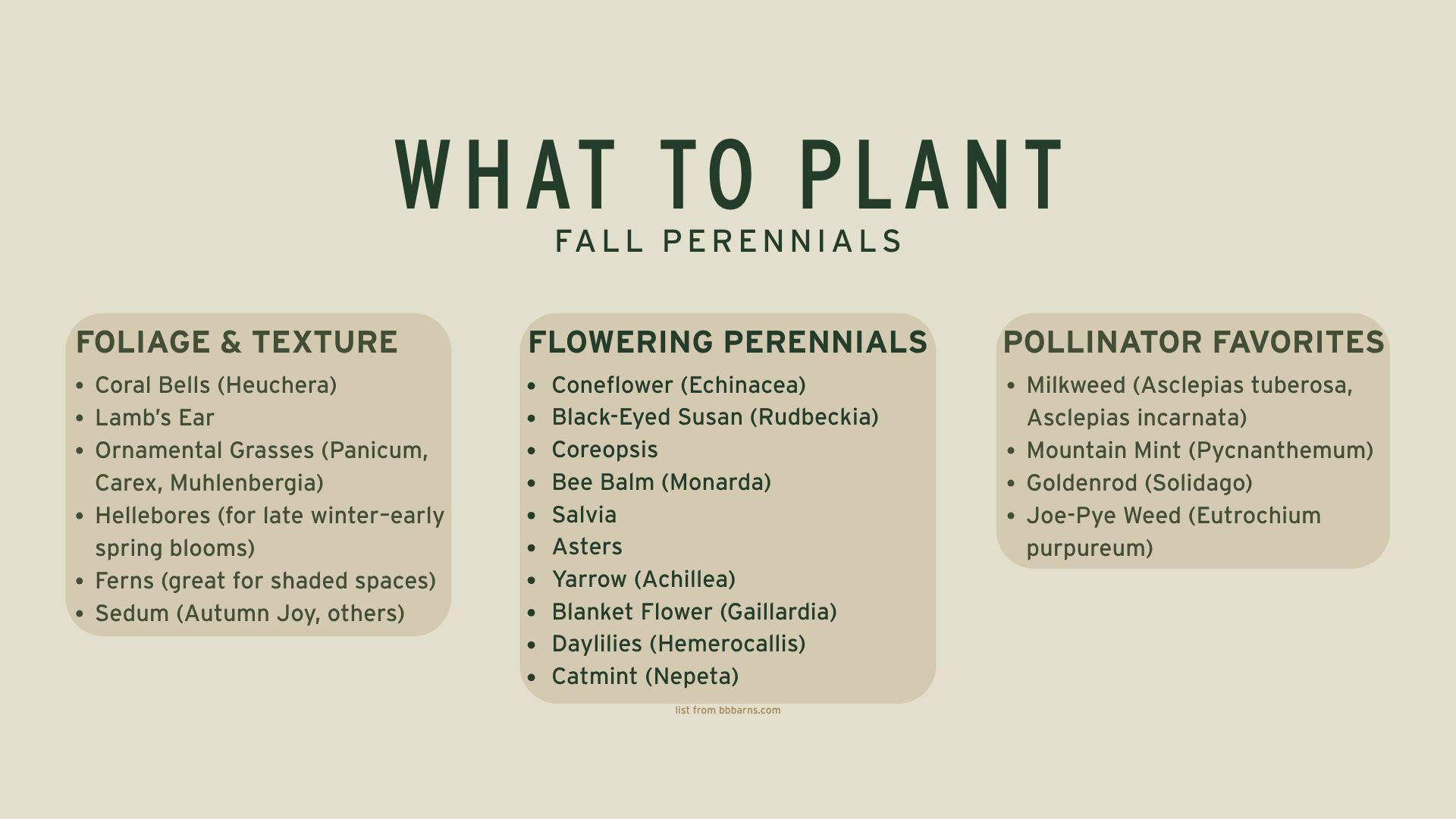
Fall is a great time to plant your perennials. With warm soil, mild air temps, and autumn rain, you have the perfect conditions for strong root development before winter sets in. Planting now may seem like a waste since the cold is creeping up on us, but it is actually ideal for growing strong, healthy plants that will thrive for years to come. Think of it like an investment in your garden, and you will still get a few months of beauty this year!

Why plant perennials in the fall? The warm soil makes it easier for roots to establish, and right now, most plants aren’t working their hardest to push out blooms, so most of the energy is going into sending these roots into the soil. The warm ground with cooler air temperatures relieves some transplant stress that may occur at other times of the year. Summer brings hot air mixed with dry, overheated soil, while spring has cooler air temps but the soil is also cold and recovering from winter. Fall typically has more consistent seasonal rainfall, and the cooler air allows the moisture to soak into the soil and help roots establish quicker. Once spring comes, the established plants will be ready to bloom early and put all of their energy towards flowers instead of settling in.

Once you pick your plants, the ideal time to plant is at least 6 weeks before the ground freezes (in our area, this is usually late December/January). Even with the heavier rainfall in the fall, be sure to water new plants deeply at the roots. Apply 2-3 inches of mulch to insulate the soil and prevent frost heaving*. And since fall planting is focusing most on root development, avoid using high-nitrogen fertilizers which promote leaf growth - just stick to root-boosting fertilizers or natural soil amendments. 

Although we are holding onto the last stretch of summer, we’re excited for fall planting! It’s also a good time to divide up your established perennials (hostas, irises, daylilies, grasses, etc). Enjoy these cozier temperatures and get out in your garden!

Native Gardens

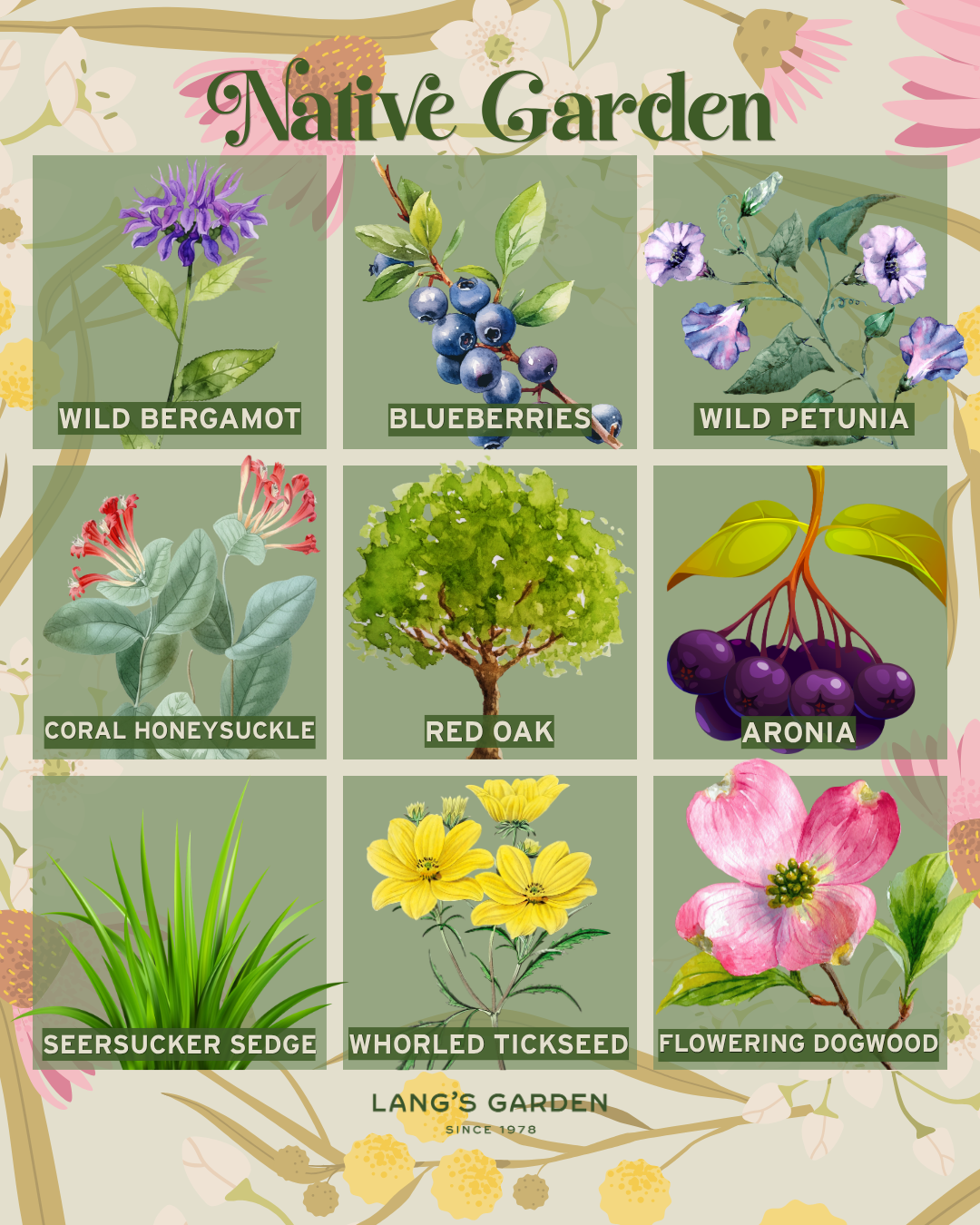
Recently there has been a growing interest in planting native gardens, likely due to the rising concern over the decline in bees, butterflies, birds, and other wildlife. Local wildlife has evolved with native plants, and they rely heavily on them for survival. Planting a native garden has many benefits and can be done in many ways, like dedicating a section of yard to native plants, adding in native plants to already established garden beds, or completely re-doing entire landscape designs to support native species. Any way you do it, adding native plants or a whole native garden will greatly improve your local wildlife habitat.

Since these plants grow naturally in this area, you are eliminating a lot of maintenance and work when planting natives in your garden. They require little to no fertilizer, as the nutrients they need are found naturally in the soil. Same with watering - they can likely survive on just rainfall and don’t need much additional irrigation. Additionally, native plants tend to handle more extreme weather conditions better than non-natives, as they have evolved over thousands of years with the local climate patterns. These adaptations allow them to fare better during seasonal droughts, heavy rains, and temperature swings in the area. They have also evolved to withstand local pests without needing chemical help. Once established, a native plant garden is pretty self-sufficient. 

The most important benefit of gardening with native plants is that they provide food and shelter for wildlife. Native bees, butterflies, birds, insects, and other animals get their food and fuel from native plants. From nectar and pollen to nuts and berries, native plants provide specialized food sources for local wildlife each season. For example, the purple coneflower’s summer petals attract pollinators, and when left standing in the winter its seedheads feed goldfinches and provide insect cover. The deep root systems of native plants improve local soil health and create dense structural layers. Native shrubs and dense grasses provide safe physical shelters from harsh weather and predators, and multi-tiered tree canopies allow for safe perching, roosting, and nesting. Our local wildlife quite literally needs native plants in our yards to survive and thrive!

A native garden isn’t just what you plant, but how you tend to it. Caring for a native garden means working with nature. Keeping fallen leaves and dead plant stems on the ground throughout the winter gives bees and other bugs a safe place to stay warm and rest. As mentioned previously, you likely won’t need to and should avoid using harsh chemicals and pesticides since they could harm beneficial insects too. Keep an eye on the weeds and pull invasive, non-native weeds early so they don’t take nutrients and space from the local plants. 

Ready to start your own native garden but not sure how to? A popular gardening standard for native vs. non-native is the 70/30 rule - 70% native and 30% non-invasive exotic - which was popularized by ecologist Dr. Doug Tallamy. Don’t overwhelm yourself, and start small. Learn about your local wildlife and climate, and pay attention to what is already there. Add in a few milkweed or native aster plants. Remove one or two invasive plants. Pick one section of your yard and start there first. It doesn’t take much, and soon you will have increased biodiversity and a more resilient ecosystem in your garden.


HElpful resources: